WHAT IS A BRASS BAND?
Way more than oom-pah and fight songs!
The Dublin Silver Band is rooted in the tradition of the British brass band. This tradition calls for a specific combination of brass instruments along with a percussion section. Unlike traditional wind bands which use trumpets and French horns, the brass band makes use of cornets and E-flat tenor horns for these voices.
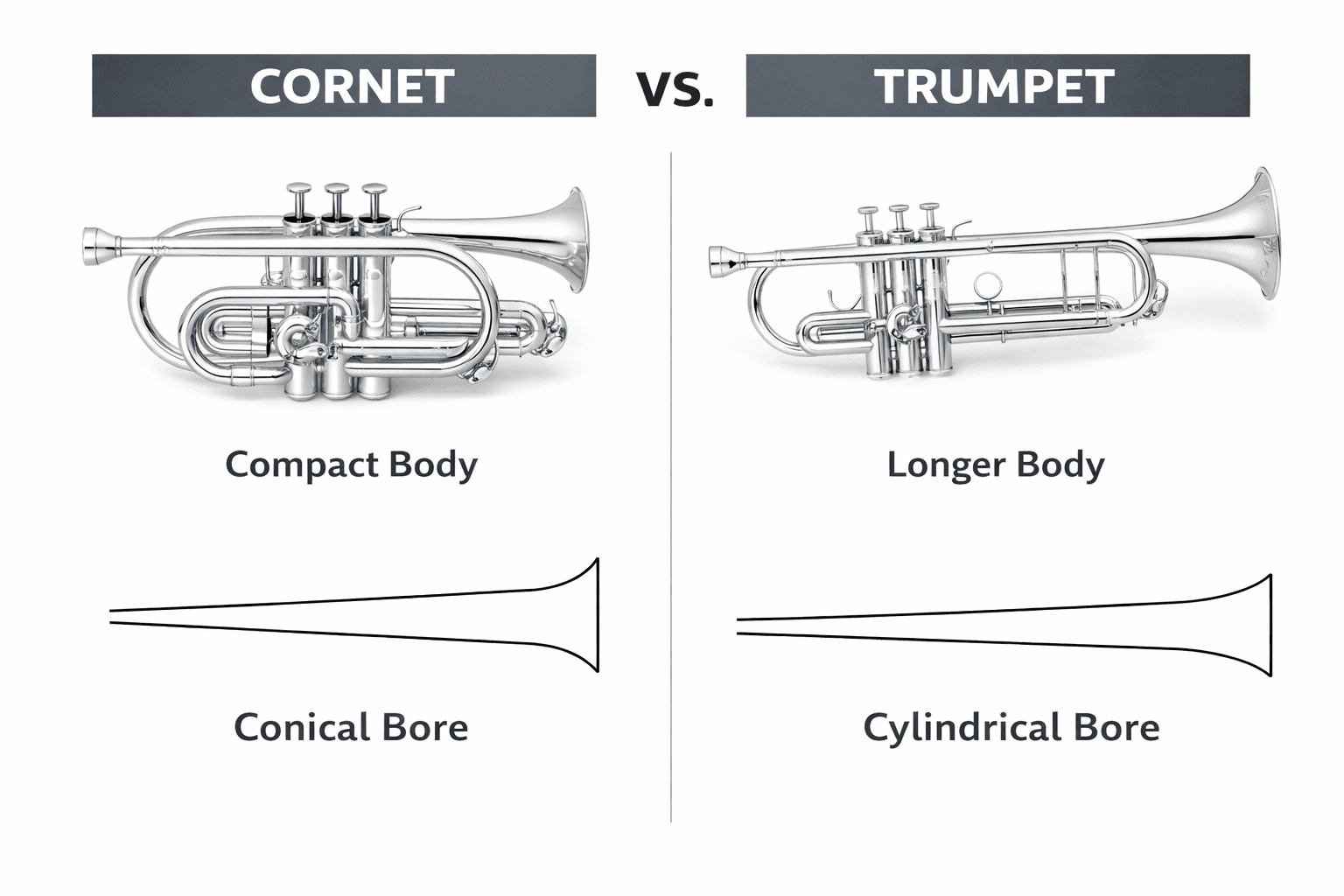
Cornet vs. Trumpet
While they may look similar, these instruments have distinct characteristics. Listen to the difference!
Hear the Difference
Notice the cornet's warmer, more mellow tone compared to the trumpet's brighter, more piercing sound.
The design of all the instruments in the brass band can be simplified to say that they are all different sizes of essentially the same conical-bore valved instrument... with the obvious exception of the trombone. This homogeneity allows for a rich and balanced sound that cannot be duplicated in other ensembles.
Interestingly, part of the tradition calls for all the parts for brass band music to be written in the treble clef... from soprano cornet all the way down to tuba. The only exception is the bass trombone, which is written in the bass clef.
Instrumentation
Upper Voices
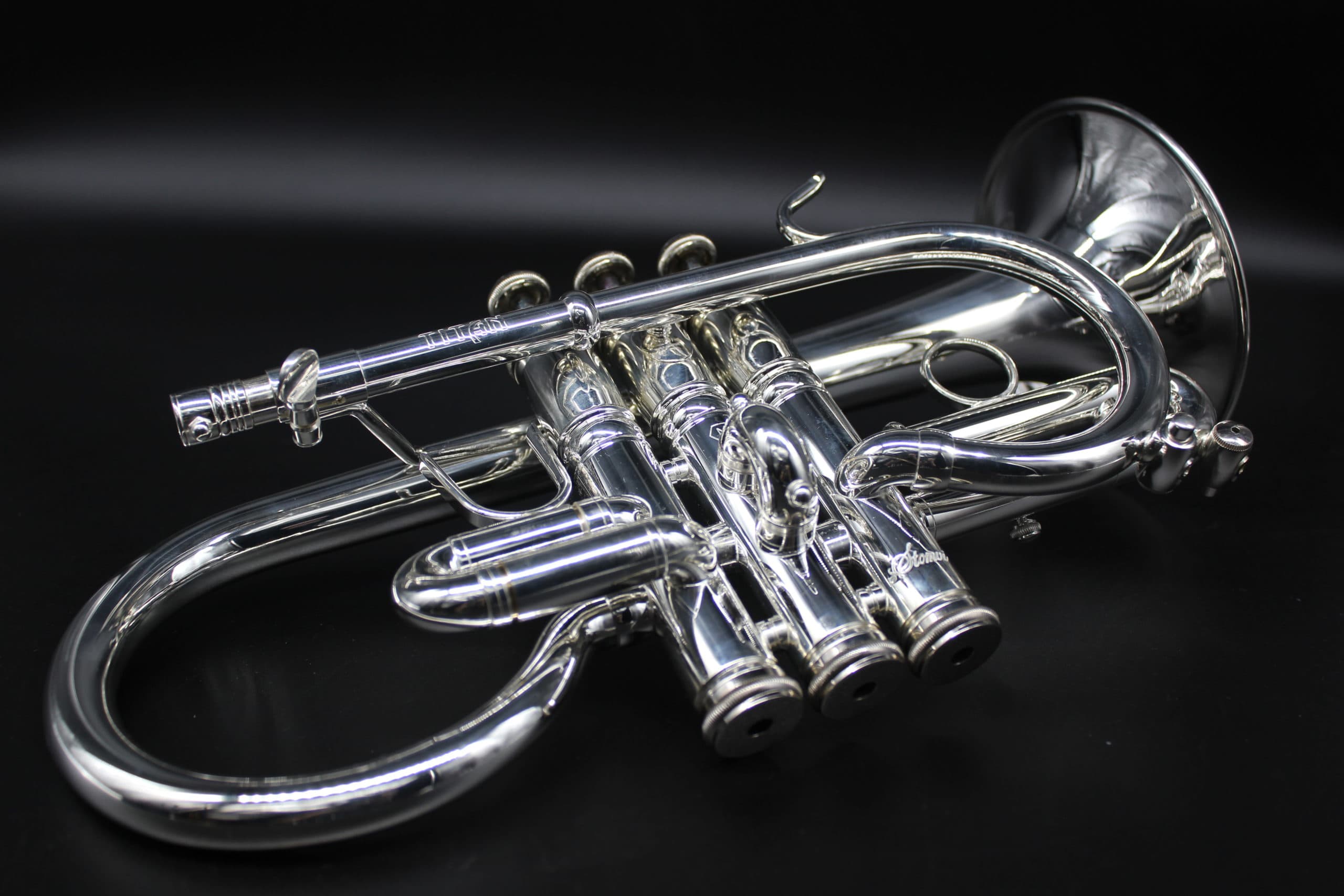
E-flat Soprano Cornet
Provides the highest voice in the band.
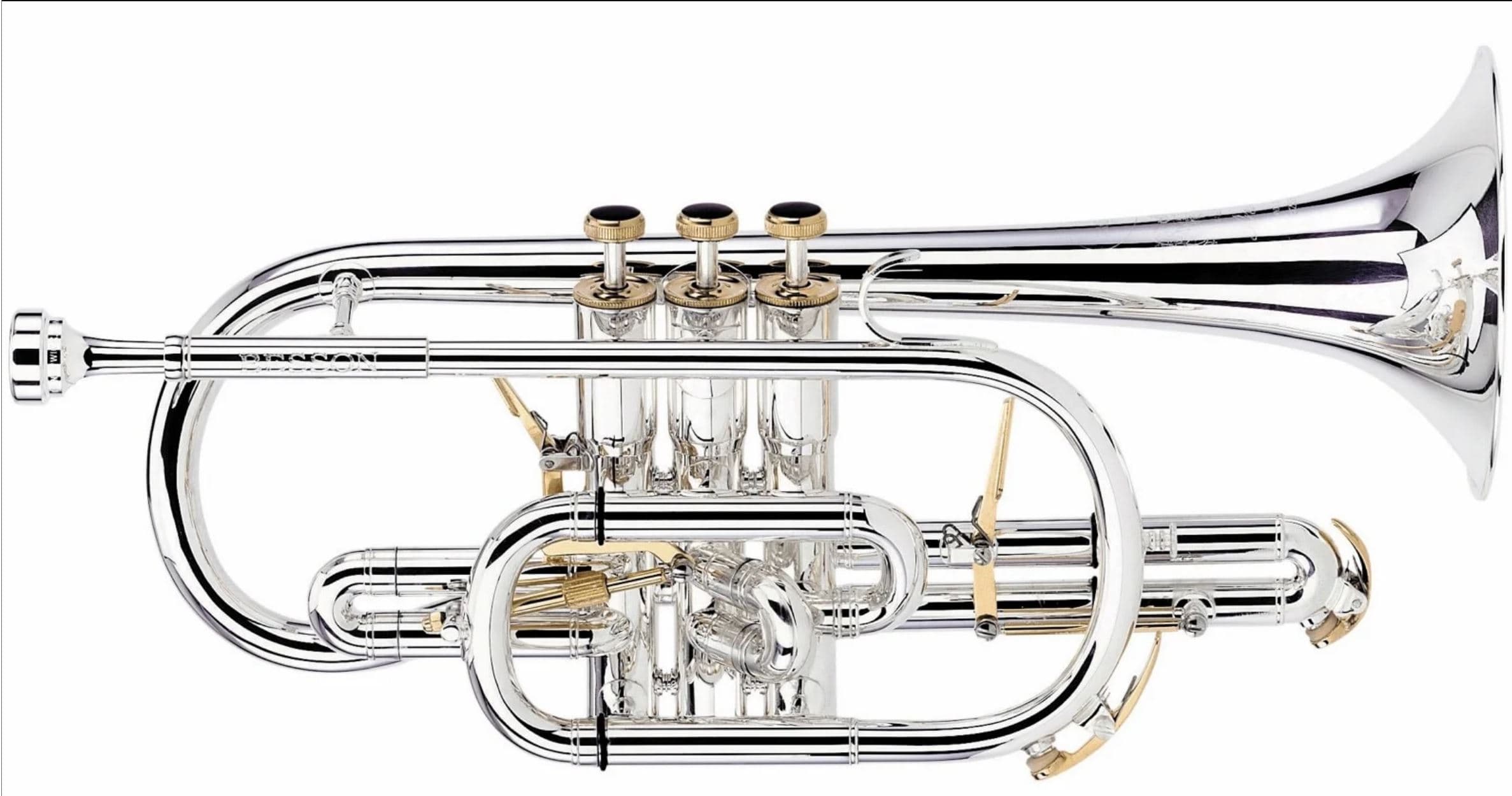
B-flat Cornets
Solo, 2nd, 3rd, and repiano parts. Cornets produce a more lyrical and focused sound than that of trumpets. However, in the hands of a skilled player, the cornet is also capable of all the brilliance and dynamics of the trumpet, making the instrument extraordinarily flexible. The principal cornet position leads the upper half of the band.
Middle Voices
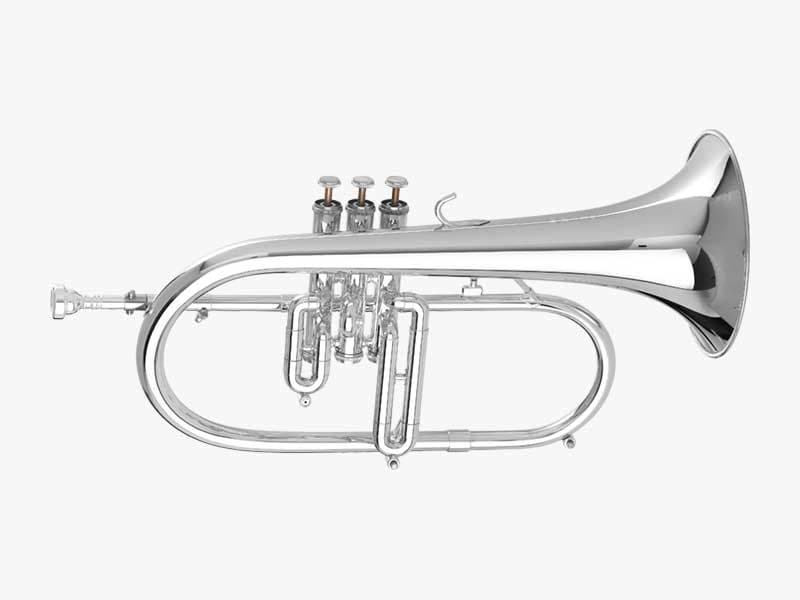
B-flat Flugelhorn
Plays in the same range as the cornet but has a darker sound and serves as a bridge from the cornets to the tenor horns.
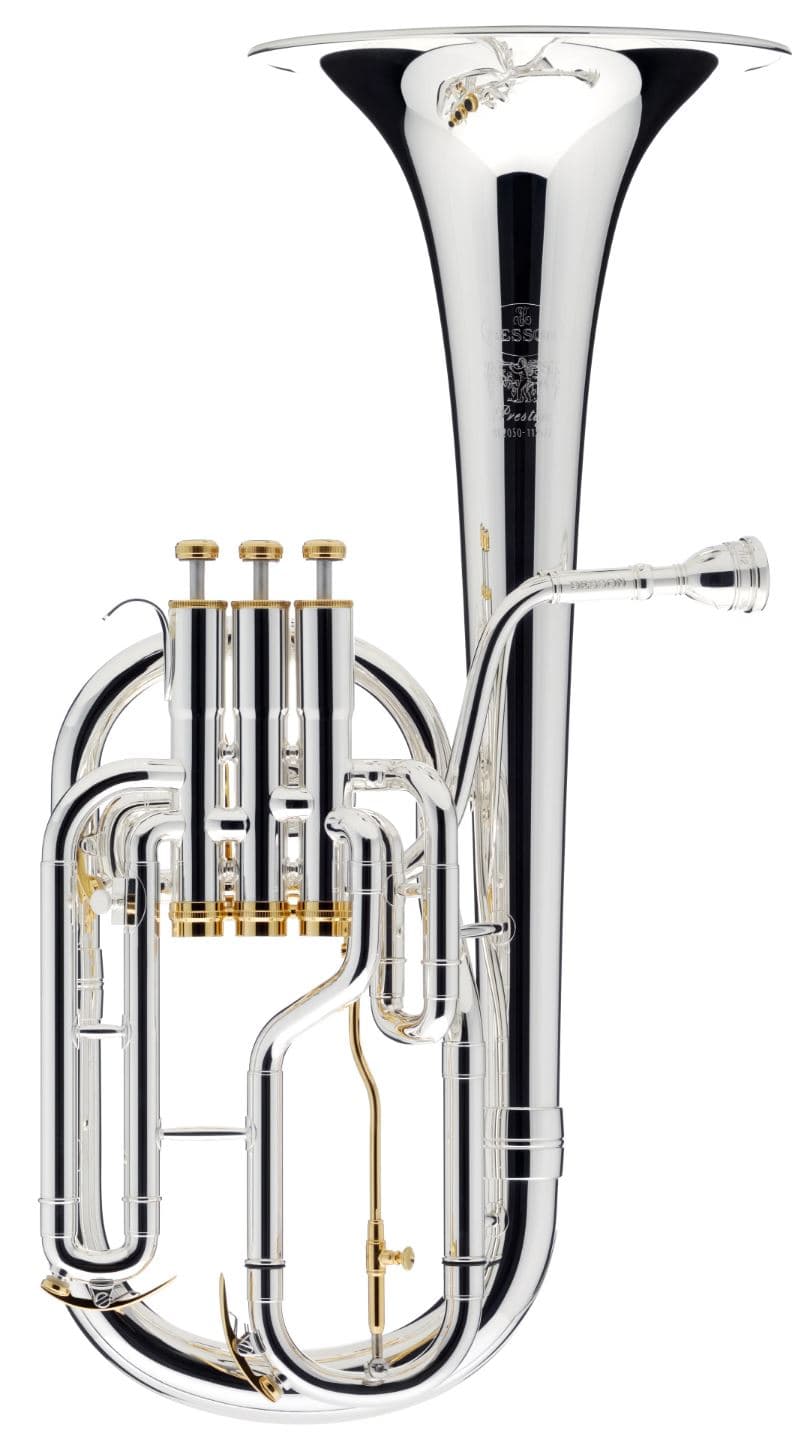
E-flat Tenor Horns
Solo, 1st, and 2nd parts. Tenor horns are upright, three-valved instruments, with a sound more focused and somewhat brighter than that of a French horn.
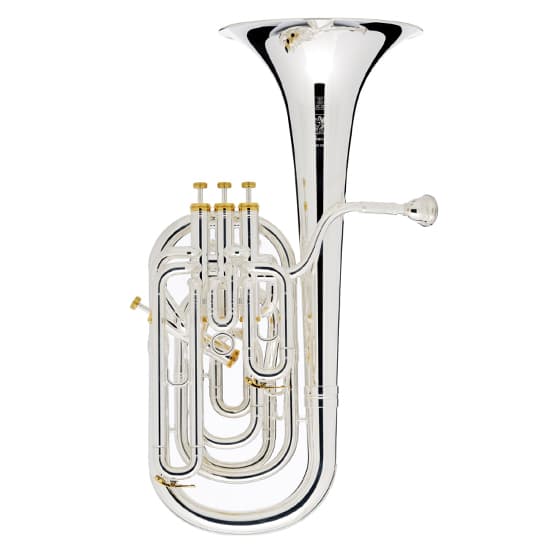
B-flat Baritone Horns
Unique to the brass band. Instruments in American wind bands that are referred to as baritones are usually euphoniums. The baritone horns serve as a lower voice in the middle choir of the band.
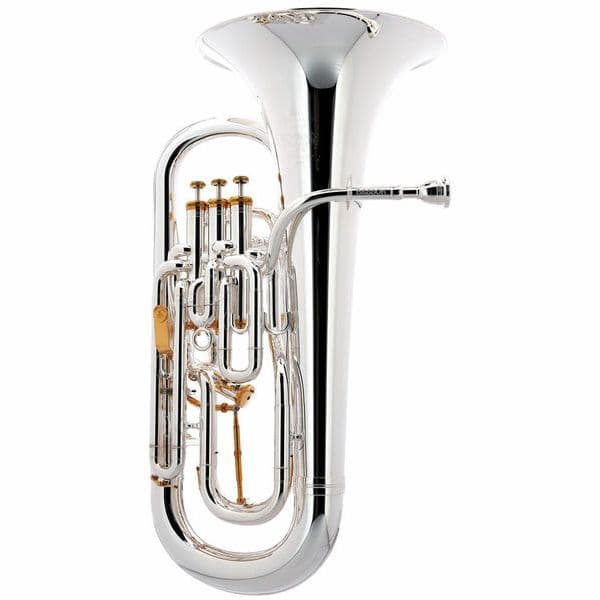
B-flat Euphoniums
Often solo voices and also function as part of the middle voice choir or as reinforcement for the bass voices. The principal euphonium position leads the lower half of the band.
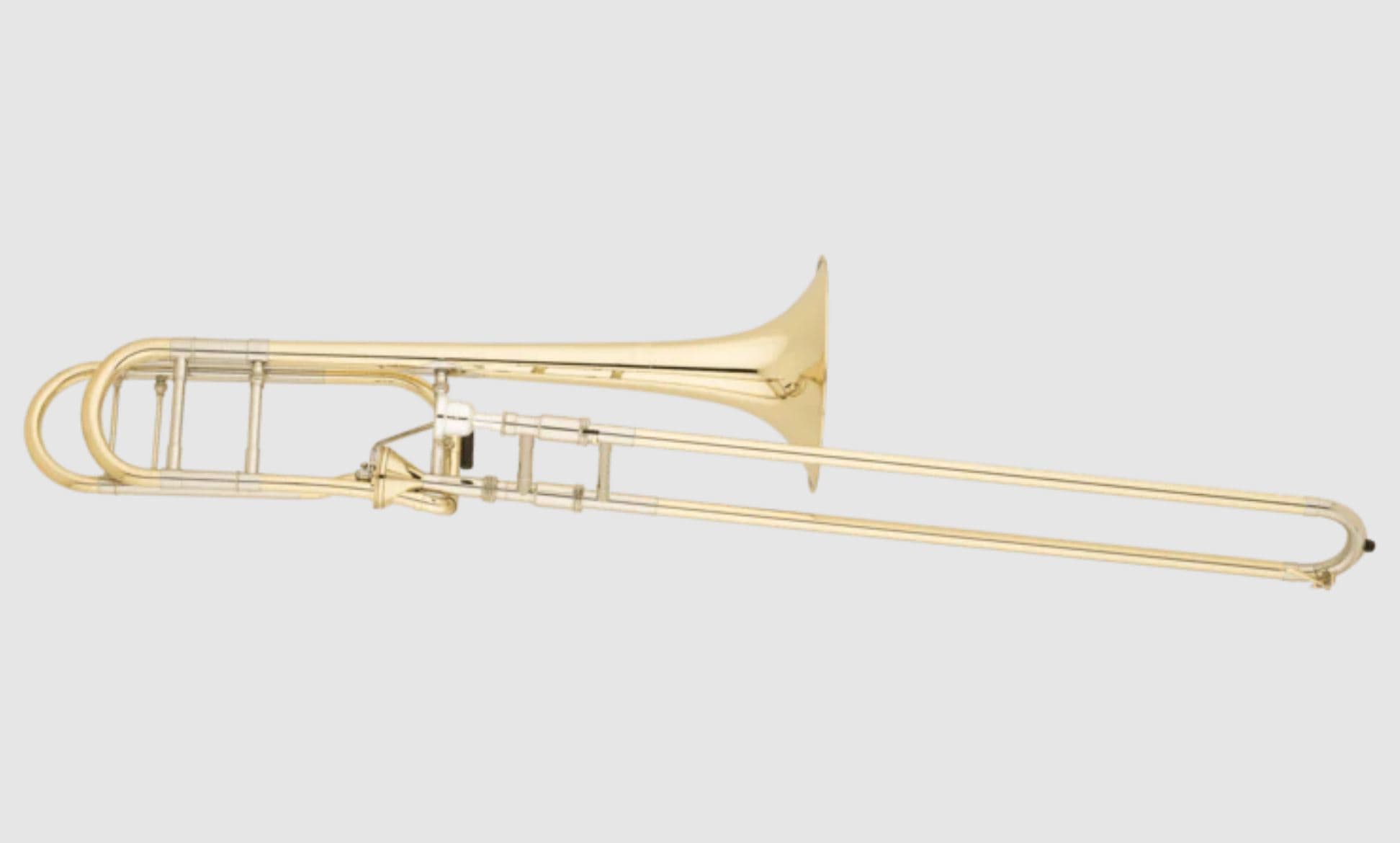
B-flat Tenor Trombones
The only cylindrical bore instruments in the band (others are conical bore), add their characteristic brilliance and prodigious dynamic output to the overall sound of the band.
Lower Voices
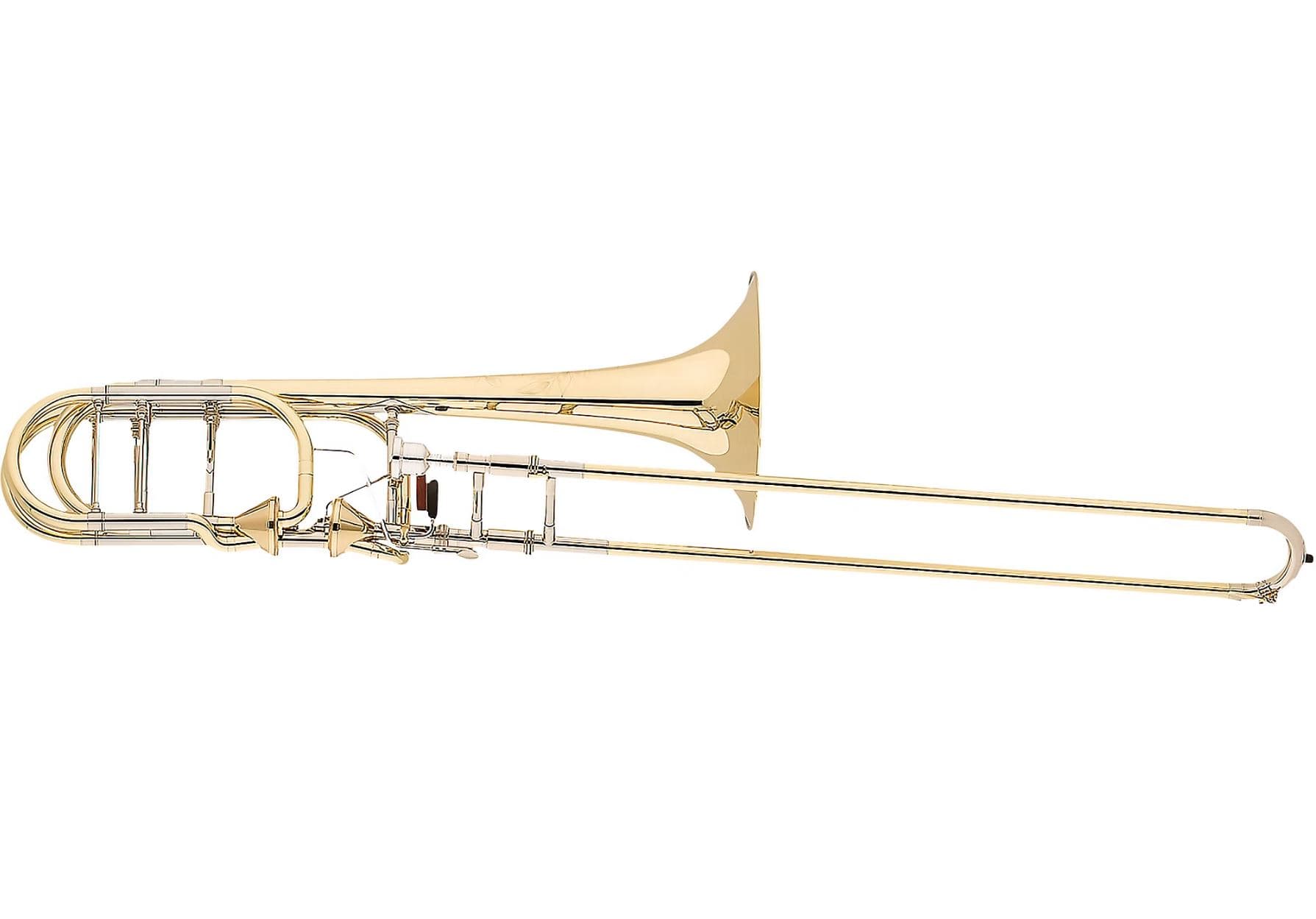
Bass Trombone
Provides both the lowest voice of the trombone ensemble and additional weight and edge to the bass line.
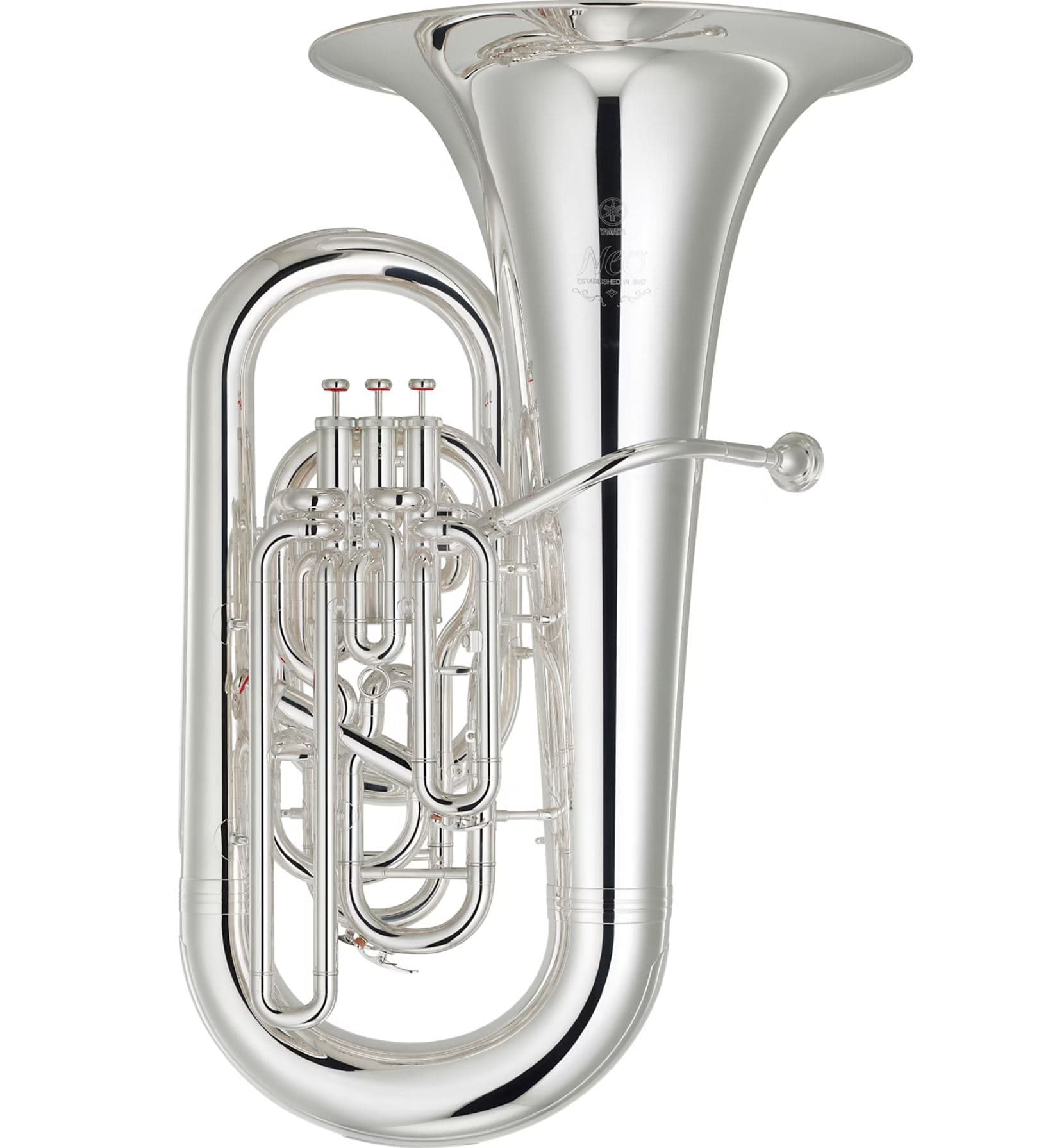
E-flat Tubas
Somewhat smaller and have agility and lyricism not typically associated with the tuba. They also integrate well with the voices just above (euphonium and bass trombone) and below (B-flat tuba).
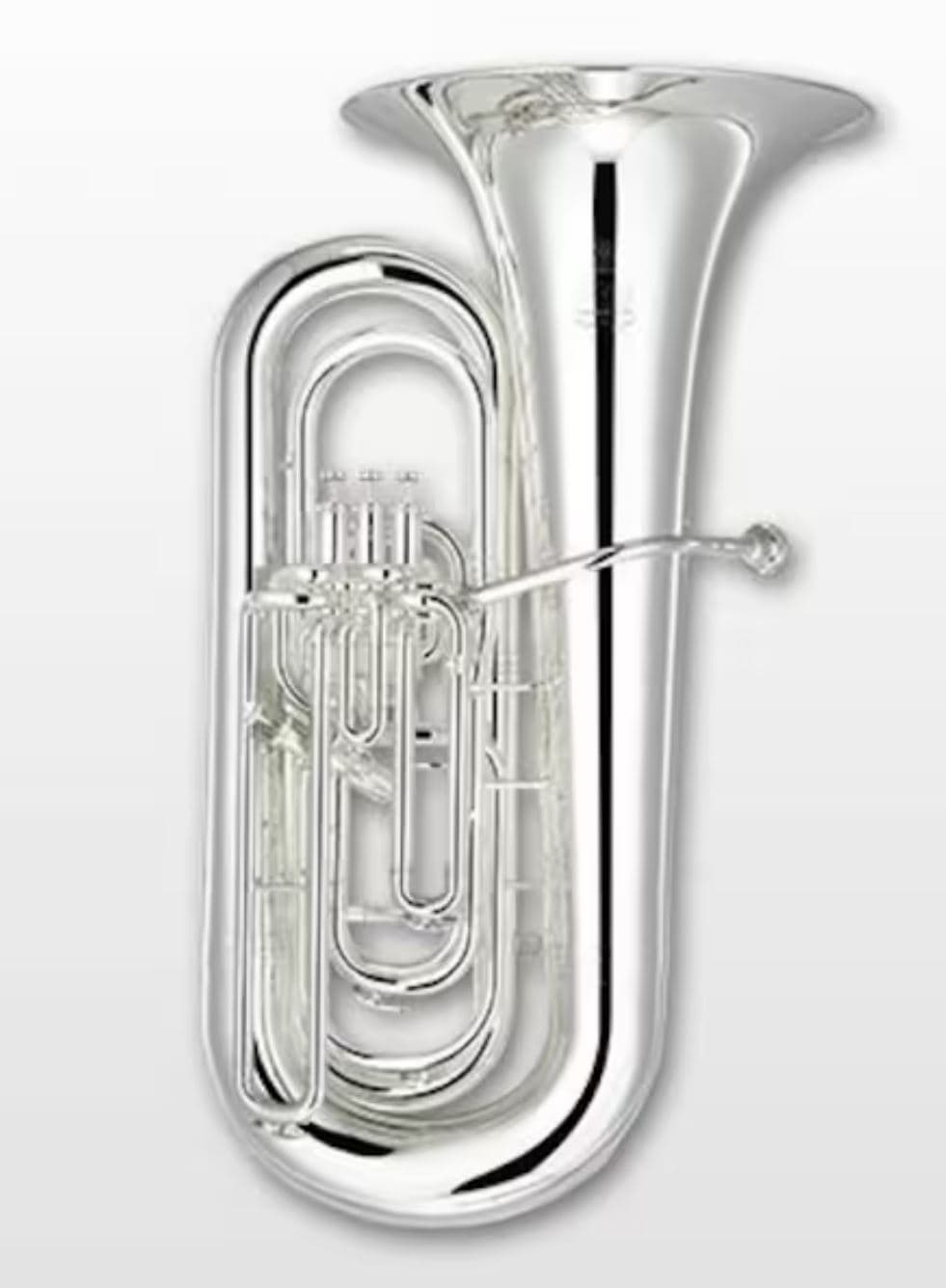
B-flat Tubas
Provide the harmonic footing for the band. The robust B-flat tuba sound furnishes the richness and fullness of foundation that is characteristic of a brass band.
Percussion
Percussion Section
The percussion section covers an astonishing array of instruments. Timpani, snare drum, bass drum, cymbals, drum set, mallet instruments and all the associated percussion instruments are typical in brass band compositions.
The Contest Tradition
One of the reasons for the specific instrumentation of a brass band is the strong and popular tradition of contesting and competition. In a brass band contest, only a set number of players can be on stage. Contest types vary around the world, but the instrumentation remains constant.
As with contests and adjudicated events with which we are all familiar for American youth ensembles (e.g., Ohio Music Educators Association, Bands of America, DCI), competition serves not only as a yardstick to measure an ensemble's quality and progress but also as strong motivation for the musicians to improve as individuals and as an ensemble.
The top contests often require all the bands (often numbering from 12-25 competing groups) to play the same "test piece" of music to create a more level playing field. The other high-profile contest format is the entertainment contest in which bands are rewarded for fine playing, audience appeal, and innovative performances.
DSB participates each year in NABBA (North American Brass Band Association) championships and various other competitive events.
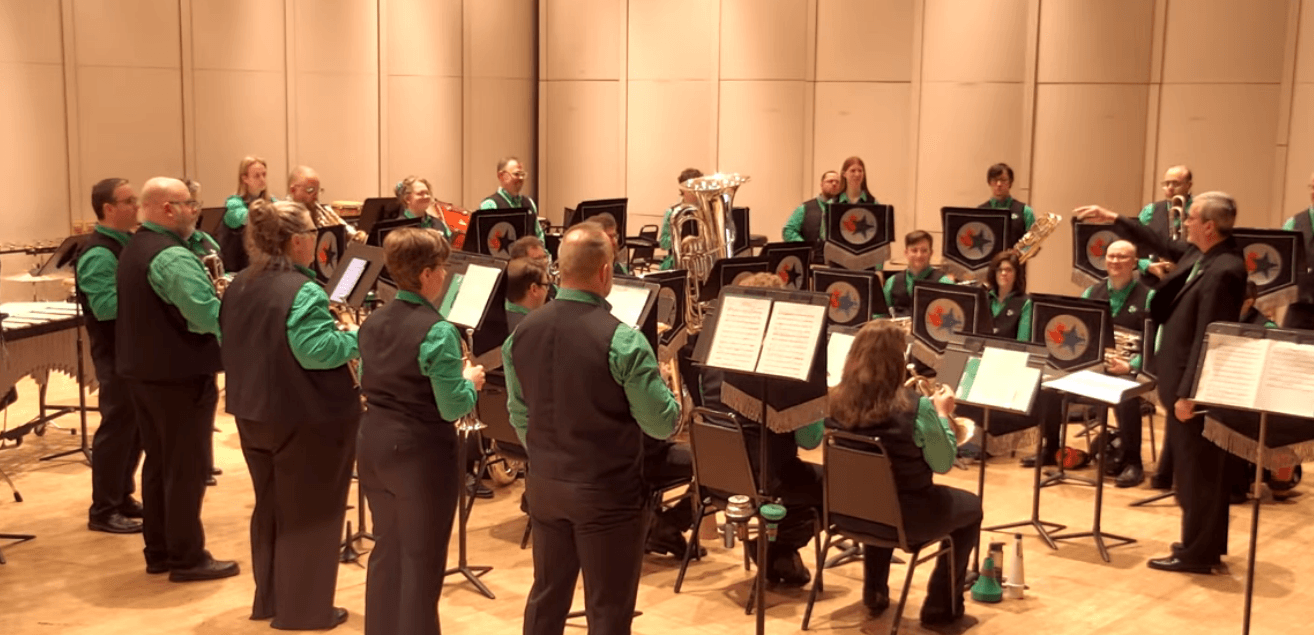
NABBA Championships
Competition Performance